
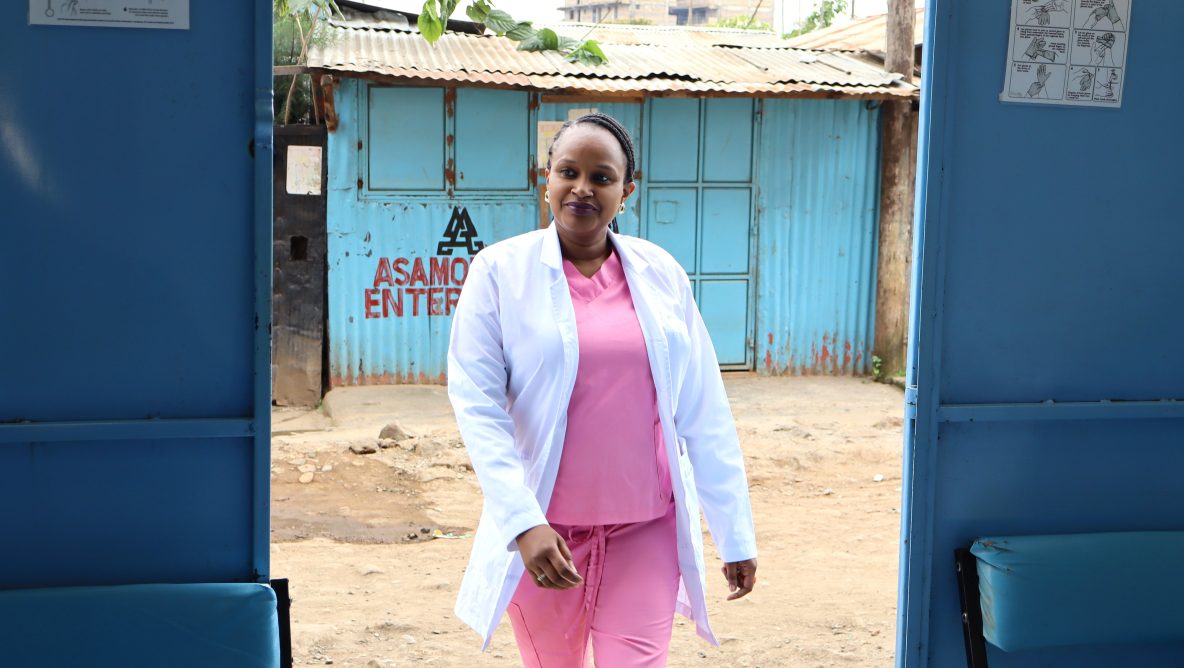
I am a nurse-midwife, and I registered back in 2015.
I started getting passionate about sexual and reproductive healthcare back on my clinical rotations on the gynae and maternity wards. I saw women who were really suffering in the post-abortion care rooms in hospitals. They had experienced unsafe abortions and were being stigmatised by my colleagues, being put on cold, uncomfortable beds without sheets. I found this hard to witness, and would do my best to keep these patients warm and comfortable. The gynaecologist in charge of my studies was impressed by my work and my interest in reproductive health, so he sent me on an intensive training on abortion care, and it eventually became my passion to support women in this area.
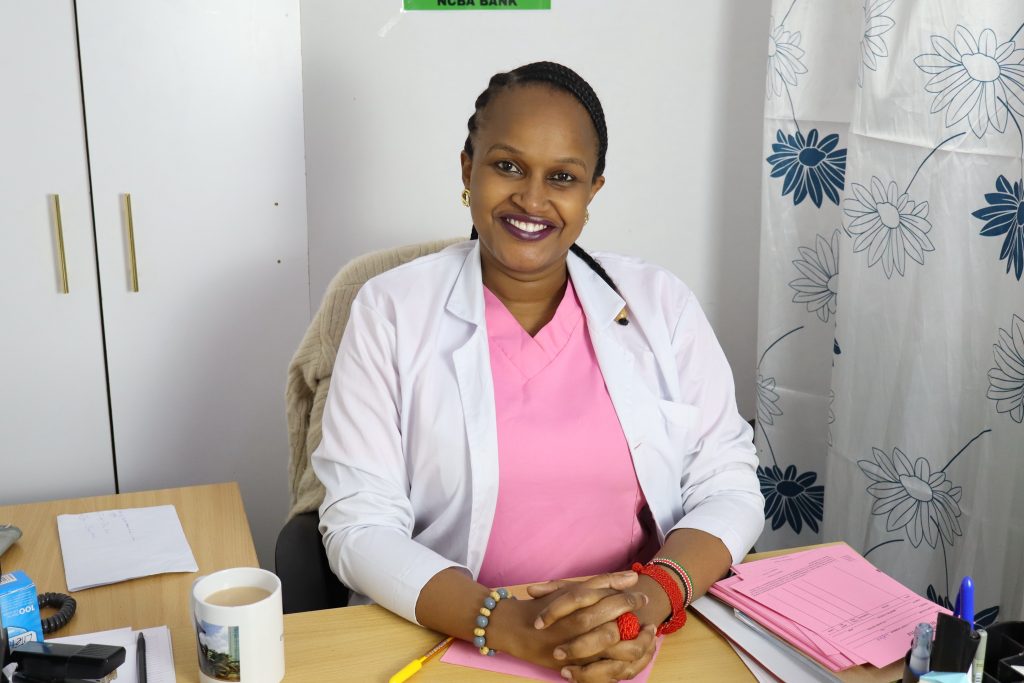
I set up the Usawa clinic in 2019 – it’s a Swahili word which means ‘Equality’.
I chose this name because we are not leaving any person behind – be it a young girl, an old woman, a queer person – we want to treat everyone, especially those who face stigma in public health facilities.
I set up the clinic in a place called Bulbul, just outside of Nairobi. In previous roles I had been serving well-off women, and advocating for reproductive rights in high offices like the Ministry of Health. But I didn’t feel like I was doing anything directly benefitting my community, and for those people who couldn’t even afford services. I chose Bulbul because it has one of the highest rates of teenage pregnancy in Kenya. I decided to be an advocate for the people living in and around this slum area. And now I’m able to offer free services to those in need, including adolescent girls.
Abortion in Kenya is a very emotive topic.
In most Kenyan households people think that abortion is the worst thing a person a can do. They call it ‘toa mimba’ in Swahili, they make it sound ugly and shameful. Abortion is highly stigmatized, and seen as a sin, and in most cases, women suffer because when they need this service, they keep quiet because they will get judged.
So, they hide themselves and use clandestine methods. In areas like this there are lots of quacks, or untrained doctors, who are working in unclean environments or even from hotel beds. This means women suffer complications and may lose their ability to have children in the future.
As providers, we do experience a lot of stigma, even from our own colleagues. But from my own experience I get a lot of relief if I know I have solved a girl’s problem. If she’s concerned about continuing a pregnancy after rape, or the situation is giving her mental health issues, it’s good to know I can support her and she will be OK.
Abortion is not totally illegal in Kenya, but our laws are restrictive.
A lot of services are denied because of the laws that we have in our country. Oftentimes, the different laws are contradictory. But it’s very clear that everyone has a right to a high standard of health care.
Despite this, we are seeing a lot of problems caused by doctors stigmatizing gay and transgender people who are trying to access healthcare. The stigma and abuse means that queer communities no longer seek care when they need it. So, I make an effort to welcome these patients, and work with LGBT organisations to ensure we can provide affordable access to sexual health care, and to HIV medications, so that Usawa can act as a trusted drop-in centre.
We reach a lot of young people via social media.
I started using TikTok back in 2023 for ‘digital advocacy’ – creating engaging content so that we can normalise conversations on sexual and reproductive health.
Every single day we are thinking about what happens to girls in our community, and with our local Youth Champions we make content that’s relatable to them. The first video which went viral was showing the removal and reinsertion of a contraceptive implant. Young people clearly wanted to learn more about what services were available to them, and this gave me the motivation to keep going. People can see me as a genuine person who offers friendly services and they feel empowered to come to the clinic.
We have really grown in just the last year.
Our reach on social media has increased, and has led to me seeing more patients in the clinic. I’m so glad that thanks to the SAAF grant we can provide affordable, and even free services to those who can’t afford them. Abortion can be quite expensive in other facilities, but here the people who can pay balance out those who can’t.
I’d like to expand the clinic, to make more space for seeing patients, and also to develop a Youth Friendly Centre where we can give a space for young people to be themselves and to learn new skills. I’m excited about the next chapter.
Interview with Jolly Mukangu, Executive Director of Usawa Reproductive Health Association, a SAAF grantee partner in Kenya.