
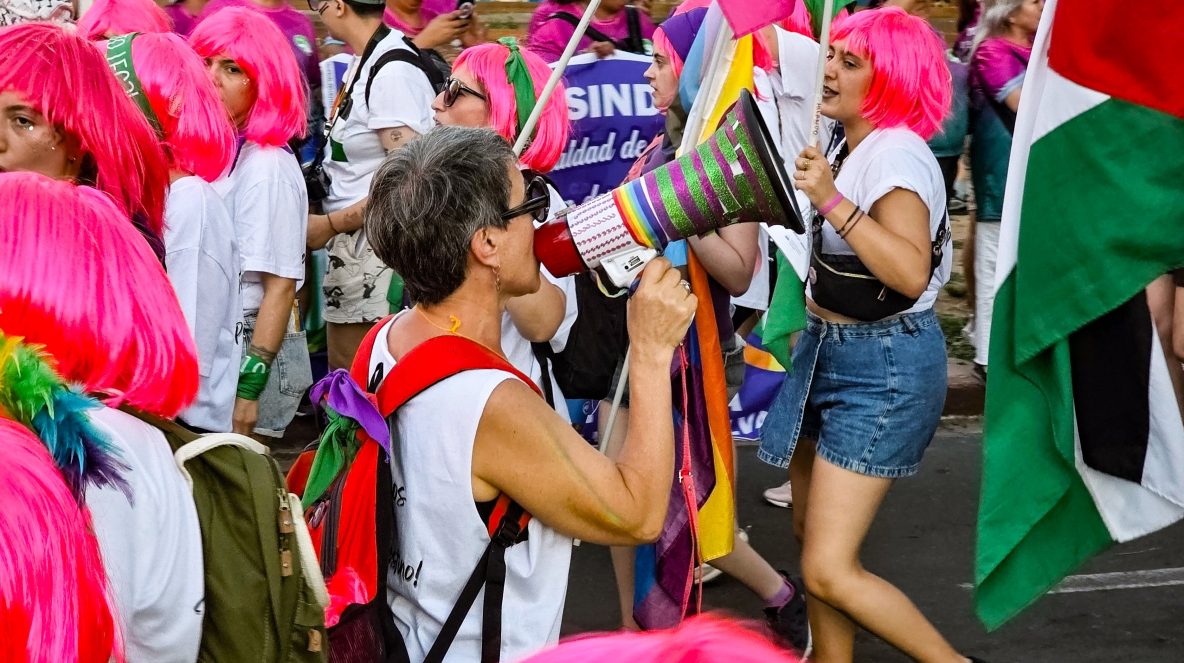
Late last year I was fortunate to be able to visit SAAF grantee partner Socorristas En Red, who SAAF has been supporting since 2020. They are a feminist network active across Argentina, made up of around 40+ autonomous collectives. Socorristas was a key part of the change to legalise abortion in Argentina and has been providing practical and emotional support to people seeking abortion since they formed in 2012.
Socorristas’ volunteers make sure that every woman and person who calls their hotline is able to receive information, and any other type of support they need around their unwanted pregnancy. All the collectives who are part of Socorristas have the commitment to collect information on the people they support, and it was this evidence of need that supported the call to legalise abortion in Argentina in 2020.
My visit to Socorristas allowed me to see, beyond the marches, chants and the collective strength they display in the streets, how the support they offer works in practice. The Socorristas network creates safe spaces where no one is judged, where abortion can be discussed calmly, and where information is shared in a clear, respectful and careful manner.
For many women who have previously accessed, or tried to access abortion through the health system, where they were met with judgement or mistreatment, coming to a space like this completely changes their experience. In Socorristas’ workshops, they receive practical information about how to take abortion medications and how to go through the process as calmly and comfortably as possible.
The work of Socorristas seeks to reaffirm the autonomy of people having abortions.
Each person who is accompanied by the network can choose what they want to do with their pregnancy. Whether to continue it, to have an abortion within the health system, or to have a self-managed abortion. The priority of Socorristas is to guarantee that people’s decisions are respected and supported in the best possible way.
Their experience for the last 14 years has allowed them to tailor their support to meet the different needs of the people who call their hotlines: for teenagers, people who live in abusive contexts, different gestational stages and many more. Most of their workshops happen with women who are similar in age and are at a similar stage of pregnancy. These women are invited to meet in person with three or four others, and here they receive information on the rights set forth in the law, how a medical abortion happens, what to expect in terms of side effects, what rights they can claim in terms of pre- and post-abortion medical care, and what they can do to ensure the process is as calm and pain-free as possible.
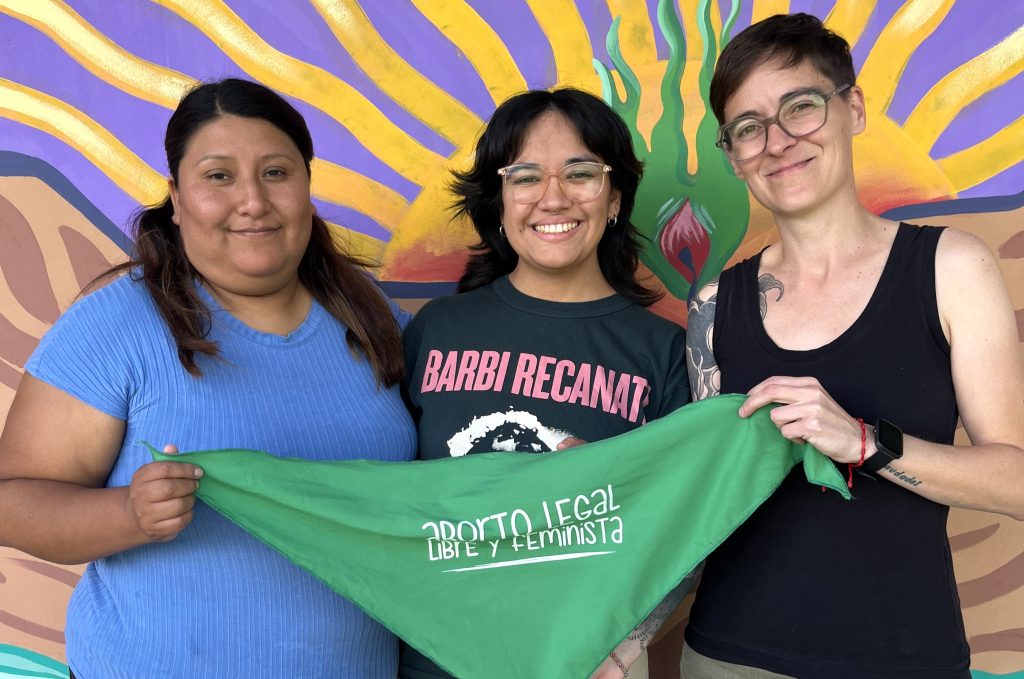
Their support opens doors that go beyond abortion itself.
During the workshops that I witnessed, many people were finding for the first time a space where they could talk to others who are going through something similar. It allowed me to see how possible it is to talk about abortion outside of the stigma and secrecy that has been normalised in society. By giving the space for women to talk freely about their current situation, previous abortions, their fears, or just to listen, I could see how important it was for them to know that they were not alone. To know that many people have similar experiences and that abortion can be carried out very safely in the comfort of their own home, or in friendly health spaces, depending on each case. Sometimes, these conversations revealed things they had never been able to name before, such as recognising abusive situations, based on the experiences shared by other women in the workshop.
Another fundamental part of what they offer is human support: those seeking support from Socorristas know that they do not have to go through the process alone. That someone is there if a question or an unexpected event arises during the process. That they can organise their time between work, children and other responsibilities, to ensure that the abortion is as stress-free as possible.
Something I saw very clearly is that this work also transforms the volunteer activists who accompany people on their abortion journeys. Many of the ‘Socorristas’ (which means ‘lifeguards’) came to the network after having been accompanied through their own abortions. They shared that it was the first time they had experienced real support, without judgement. Several interviews I undertook with Socorristas confirmed this:
“I feel that we are doing something concrete and we see the results. Seeing the relief in a person after having a safe abortion is incomparable.”
“I joined after having an abortion. I felt that I finally had support, a network.”
“Abortion was always a secret; we seek to bring it out of the closet and accompany it with care.”
“I wanted to accompany others because I don’t want any teenager to go through what I went through.”
“Sometimes, accompanying means that someone can make decisions about their life for the first time.”
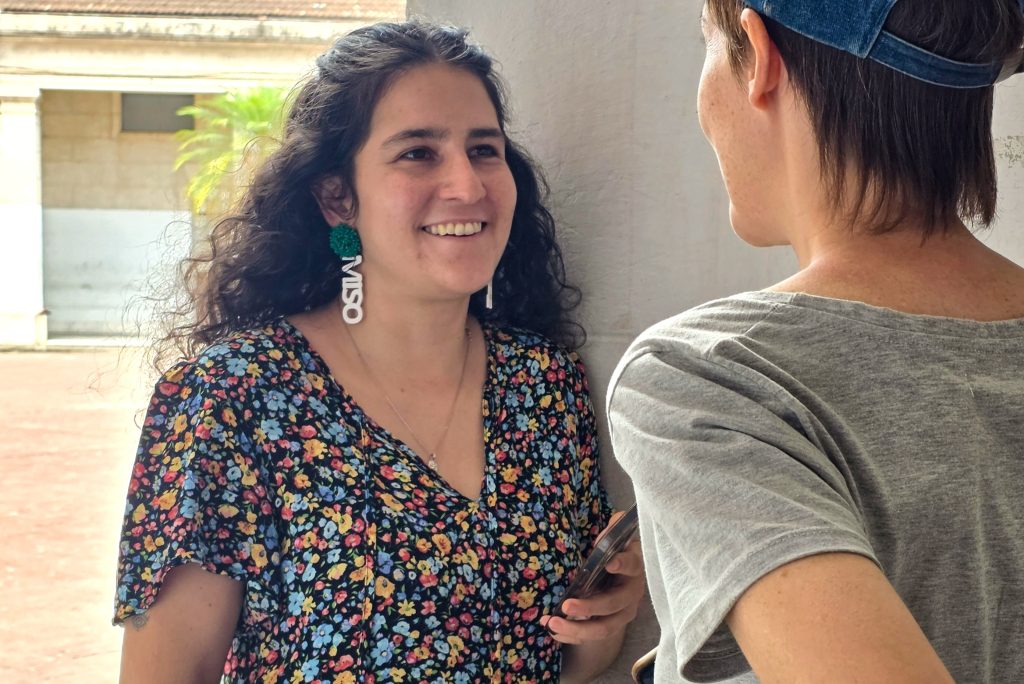
The quiet power of Socorristas’ continuing support.
I also had the chance to accompany Socorristas to the Plurinational Meeting of Women and Gender Diverse People in Corrientes. This annual feminist gathering brings together more than 70,000 activists from across Argentina for workshops, debates, and collective action. More than 100 Socorristas activists came together there, singing and celebrating the work they do while also protesting against a state that continues to place daily barriers in the way of abortion access and care.
It was powerful to see the way the network organised collectively to ensure that as many volunteers as possible could attend. For example, I travelled with more than 60 other people on a 30-hour bus ride from Neuquen. They decided to do this, instead of flying, so that those without the financial means could still go, especially considering the context of Argentina’s current economic situation.
Seeing thousands of women marching and singing was deeply moving. But what stayed with me most from my visit were the quieter moments, away from the stage, in the network’s day-to-day hotline work and workshops. It was there that I saw women from all walks of life find someone who listened to them without judgement, offered clear information, and reminded them that they have the right to decide. To show that abortion is normal.
There, in that simple yet political gesture, I better understood the magnitude of what they do. Since they began systematising their accompaniment work, the network has supported more than 100,000 people across Argentina, each one through a process grounded in care, respect, and autonomy.
It is in these quiet spaces that the real strength of Socorristas emerges: accompanying and supporting each person so they can exercise their autonomy with information, care, and dignity. This is the often unseen daily practice that sustains an enormous national movement.
By Laura Gutiérrez Villaveces, Programme Advisor at SAAF.