
Last week, UNFPA released a new report which revealed that 1 in 4 women around the world are unable to refuse sex with their husband or partner. When asked about contraceptive use, sexual relations, and reproductive healthcare only 56% of women in a relationship reported being able to exercise decision-making in all three of these areas.
Add to this the fact that around a quarter of women of reproductive age report having experienced physical and/or sexual violence at the hands of their partner and we are living in a world where women’s bodies and lives are still not our own. Where our homes can be sites of coercion rather than safety.
This is a global human rights emergency, and it should horrify and outrage us all.
The freedom to decide if and when to have sex, whether to use contraception, and whether to continue a pregnancy, are all fundamental to our right to make decisions about our own bodies and lives.
How does gender-based violence relate to reproductive autonomy?
We know that intimate partner violence is common around the world. Adolescent girls are particularly at risk – with more than one in five having already experienced violence from a partner before the age of 20.
Rape can lead to unwanted pregnancy. Data from the US show that one in 20 women have experienced a pregnancy as a result of rape. 30% of the women raped by their partner also experienced some form of reproductive coercion from the same person. Reproductive coercion might look like refusing to wear a condom, stopping someone from using contraception, or in other ways deliberately getting them pregnant against their will.
There are horrific reports showing how reproductive coercion, not just rape, is used as a weapon of war. For example, in Tigray, soldiers subjected women to extreme sexual violence, including forcibly removing a contraceptive device from a teenage girl’s arm, and inserting foreign objects into women’s reproductive organs. These acts of violence represent deliberate attempts to control women’s bodies and undermine their reproductive freedom.
Restricting abortion access is another way of controlling reproductive autonomy.
Just as individual men may obstruct women’s access to contraception or abortion services, so too do states across the world. 41% of people of reproductive age live in countries that legally restrict abortion. Yet abortion is a simple and safe medical procedure. Legal restrictions, stigma and other barriers, still put safe abortion care out of reach for so many, particularly those who are already marginalised.
So, women, girls, and others are being impregnated against their will and then denied the option to end pregnancies which result from this. And research from the US shows that those who are denied abortions are more likely to stay tethered to abusive partners, as well as suffer poor physical and mental health outcomes. The cycle continues.
Progress on sexual violence and reproductive control is not happening fast enough.
According to the most recent report on the Sustainable Development Goals, violence against women remains “one of the most persistent and underaddressed human rights crises“. But despite the scale of this crisis, change is possible. And the progress we have seen so far on sexual and reproductive rights has not happened by accident. It is the result of decades of organising, advocacy and resistance by feminist movements, activists and women demanding control over their own lives.
For example, this year, the UN Human Rights Council recognised ‘reproductive violence’ as a distinct category of gender-based violence. Rates of child marriage are declining, and the past 30 years have seen “an overwhelming trend towards the liberalisation of abortion laws across all regions.”
But for millions of women and girls, the right to decide what happens to their own bodies still remains out of reach. We need better laws, stronger health systems, comprehensive sexuality education for all, and a fundamental shift in how societies understand gender, power, and consent. We need to recognise reproductive autonomy as central to ending gender-based violence, not as a separate issue.
This 25th November, let’s turn our outrage into action and stand with the global feminist movements fighting for a world where everyone has the freedom to make decisions about their own bodies and lives, free from violence, coercion and control.
By Laura Hurley, Programme Advisor and Communications Lead for SAAF.
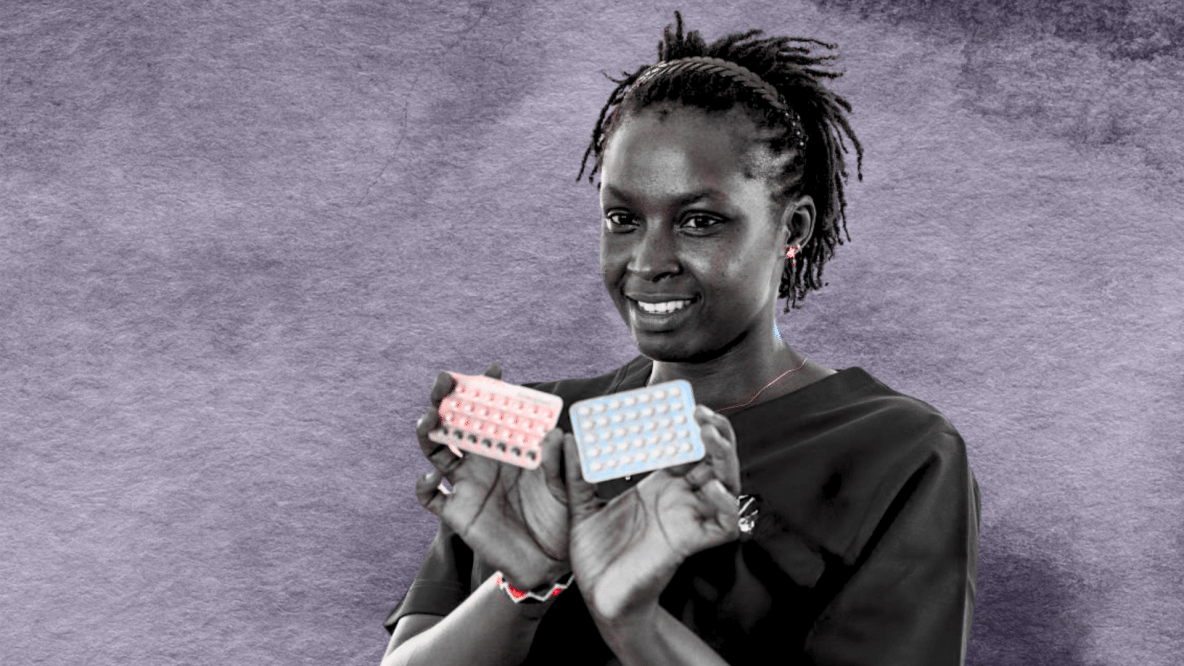
Photo: SAAF grantee partner Resilience Action International, Kenya